

In the world of heritage and restoration stonemasonry, pointing is a term of paramount importance. It refers to the process of renewing the external part of mortar joints, a critical aspect of maintenance and repair in masonry construction. This article delves into the intricate details of pointing, its historical context, and its role in the restoration of stonemasonry.
Pointing has been a cornerstone of stonemasonry since ancient times. It is a practice that has evolved over centuries, with techniques and materials varying across different cultures and eras. This article aims to provide a comprehensive understanding of this crucial aspect of stonemasonry.
Historical Context of Pointing
The history of pointing is intertwined with the history of masonry itself. As early as the Roman times, pointing was used to enhance the durability of masonry structures. The Romans used a mixture of lime and sand, sometimes adding crushed brick or volcanic ash for additional strength.
Over the centuries, the techniques and materials used in pointing have evolved, reflecting changes in architectural styles, construction technologies, and cultural preferences. For instance, during the Middle Ages, the use of oil and tallow became common in pointing, while the Renaissance period saw the introduction of gypsum-based mortars.
Pointing in the Industrial Age
With the advent of the Industrial Revolution in the 18th century, the practice of pointing underwent significant changes. The mass production of Portland cement, a material far stronger and more durable than traditional lime mortars, revolutionized the field. This new material allowed for more precise and durable pointing, significantly extending the lifespan of masonry structures.
However, the use of Portland cement was not without its drawbacks. Its strength and rigidity could cause damage to softer stone materials, leading to a reevaluation of its use in the 20th century. This period saw a resurgence in the use of lime-based mortars, particularly in the restoration of historic buildings.
Modern Pointing Techniques
Today, pointing techniques are diverse and sophisticated, reflecting the accumulated knowledge and experience of centuries. Modern stonemasons have a wide array of materials and tools at their disposal, allowing them to adapt their approach to the specific requirements of each project.
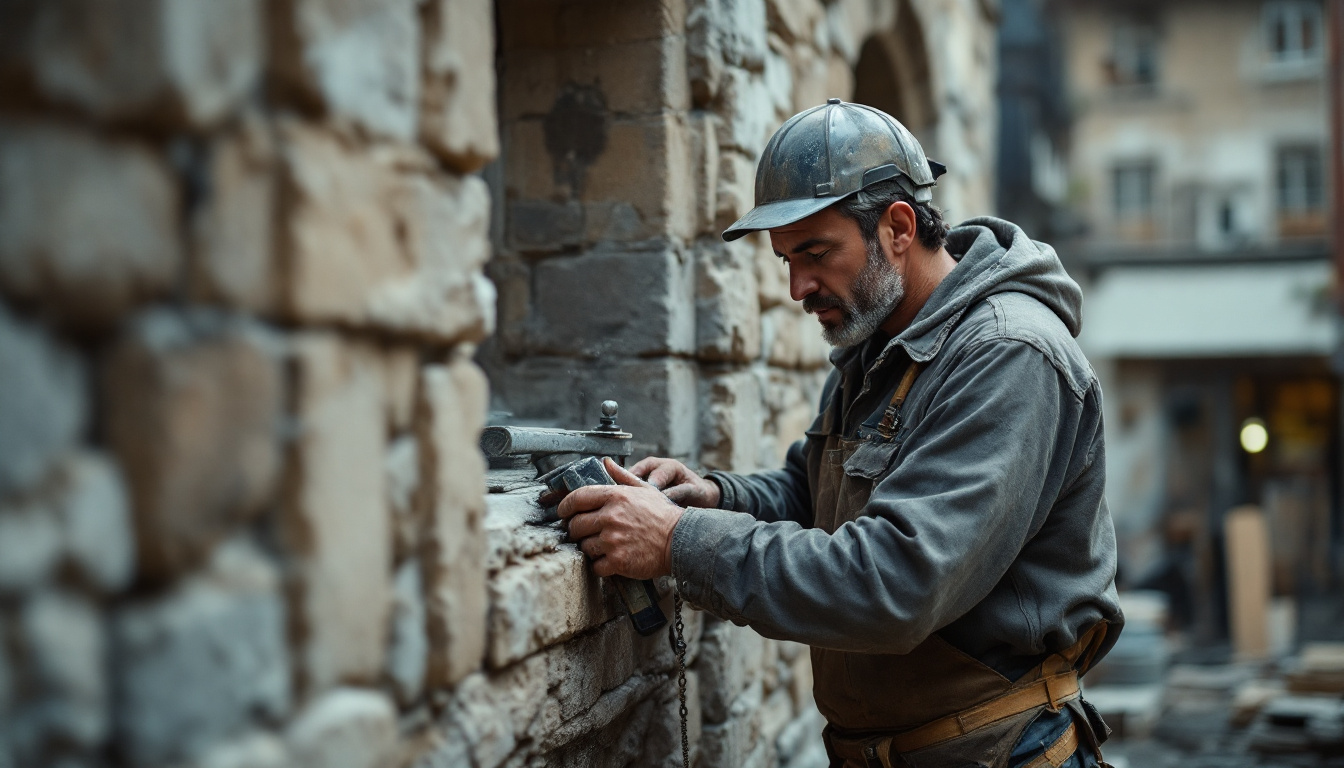
Despite the technological advancements, the basic principles of pointing remain the same. The process involves removing the deteriorated mortar from the joints, preparing the new mortar mix, and carefully applying it to the joints. The final step is to shape and finish the mortar to ensure a tight seal and a visually pleasing appearance.
Role of Pointing in Restoration Stonemasonry
In the field of restoration stonemasonry, pointing plays a crucial role. It is often the first line of defense against weathering and decay, protecting the masonry materials from moisture, freeze-thaw cycles, and other environmental factors. Proper pointing can significantly extend the lifespan of a masonry structure, preserving its historical and aesthetic value for future generations.
However, restoration pointing is not just about durability. It also requires a deep understanding of the historical context of the building, including the original pointing techniques and materials used. This knowledge allows the stonemason to recreate the original appearance of the masonry, contributing to the authenticity of the restoration.
Challenges in Restoration Pointing
Restoration pointing presents a unique set of challenges. One of the main difficulties is matching the original mortar in terms of color, texture, and composition. This requires careful analysis of the existing mortar and often involves trial and error to achieve the perfect match.
Another challenge is dealing with the effects of aging and weathering on the masonry materials. Over time, stone and brick can become eroded or discolored, affecting the appearance and integrity of the masonry. The stonemason must take these factors into account when planning and executing the pointing work.
Techniques for Restoration Pointing
There are several techniques commonly used in restoration pointing. These include the traditional method of using a pointing trowel, as well as more modern methods such as injection pointing and ribbon pointing. The choice of technique depends on the specific requirements of the project, including the condition of the masonry, the type of mortar used, and the desired aesthetic outcome.
Regardless of the technique used, the goal of restoration pointing is always the same: to preserve and enhance the beauty and longevity of the masonry structure. This requires a combination of technical skill, historical knowledge, and artistic sensibility, making pointing a true craft in the field of stonemasonry.
Conclusion
Pointing is a fundamental aspect of heritage and restoration stonemasonry, serving both practical and aesthetic purposes. It is a practice rooted in history, yet constantly evolving to meet the challenges of modern construction and restoration projects.
Whether it’s a Roman aqueduct, a medieval castle, or a Victorian townhouse, pointing is the thread that binds these structures together, preserving their integrity and beauty for generations to come. It is a testament to the skill and dedication of stonemasons, who continue to uphold this ancient craft in the face of changing times and technologies.
Discover the Art of Stonemasonry with A F Jones
At A F Jones Stonemasons, we understand the delicate balance between heritage and innovation. With over 160 years of experience, our team of experts is dedicated to preserving the beauty and integrity of stonework through meticulous pointing and restoration. Whether you’re looking to restore a historic landmark or incorporate the timeless elegance of stone into a modern design, we have the skills, technology, and passion to bring your vision to life. Make an enquiry today to learn how we can support your project with our comprehensive stonemasonry services.